A flue is the lined channel inside the chimney; the liner is the clay-tile, metal, or cast-in-place surface that keeps heat and combustion gases off the surrounding masonry. When a homeowner says "i got my flue…
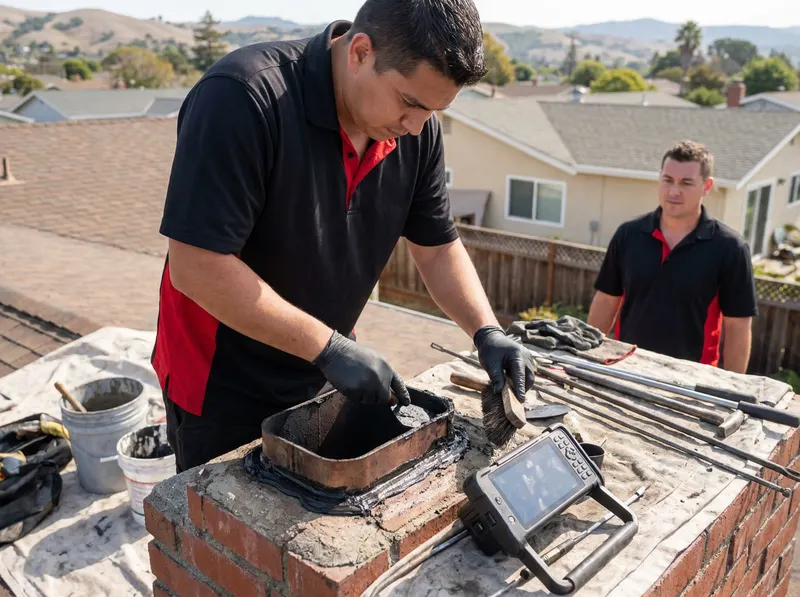
A flue is the lined channel inside the chimney; the liner is the clay-tile, metal, or cast-in-place surface that keeps heat and combustion gases off the surrounding masonry. When a homeowner says "i got my flue clogged," the blockage is usually one of three things: hardened creosote from years without flue cleaning, a nest or leaves, or a collapsed section of clay tile. A camera inspection tells the three apart, because the fix for each is different. A leaf blockage clears in under an hour; a shattered tile liner means chimney relining, not just cleaning.
Clogged flue repair starts with clearing the passage, then confirming why it plugged. A flue that fills with creosote every season points to slow-burning green wood or an oversized flue for the appliance, and that condition can return without a liner correctly sized to the stove or fireplace. Homes in the Heritage District (Old Town Vallejo) and around St. Vincent's Hill often have original unlined or clay-tile chimneys from the early 1900s; those tiles crack along mortar joints and let smoke migrate into wall cavities. A stainless steel chimney flue liner, sized to the appliance outlet, restores a smooth, sealed path and meets the NFPA 211 requirement for a sound liner. In coastal-influenced areas like Glen Cove, Marina Vista, and South Vallejo, salt-laden air near the Carquinez Strait accelerates corrosion on older metal liners, so a rusted liner is a common finding on inspection.
Sealing a flue is the right choice when the fireplace is retired and the homeowner wants to "seal it off" to stop drafts, moisture, and animal entry. A top-sealing cap or a permanent flue seal-off closes an abandoned flue while leaving the masonry intact; this is common in remodeled Hiddenbrooke and Country Club Crest homes where a gas insert or heat pump replaced the wood fireplace. The trade-off is straightforward: clearing and relining keeps a working fireplace safe for continued burning, while sealing ends fireplace use but eliminates the maintenance and the draft. If the fireplace still gets lit, relining fits; if it has not been used in years and will not be again, a seal-off fits.
The process runs in order: 1) a Level 1 inspection or Level 2 camera scan reads the flue interior; 2) the specific defect, clog, crack, or unused flue, is documented with photos; 3) a written estimate lists the exact scope and parts; 4) the repair, relining, or seal-off is completed; 5) a final photo confirms the finished flue. "Is this a chimney company", yes; this is a Solano County chimney sweep serving North Vallejo, Vista de Vallejo, Carquinez Heights, and the surrounding neighborhoods. The Chimney Safety Institute of America (CSIA) recommends annual inspection, which is when most flue defects near Vallejo Waterfront Park and Blue Rock Springs Park are first caught. A free on-site estimate confirms the actual price before any work begins, since flue height and liner diameter change the figure.
Every job gets a firm, written price after a free on-site visit.
Tell us about your flue repair & sealing job in Vallejo and we'll send a clear, written quote, usually the same day.
 Flueworks Chimney Sweep